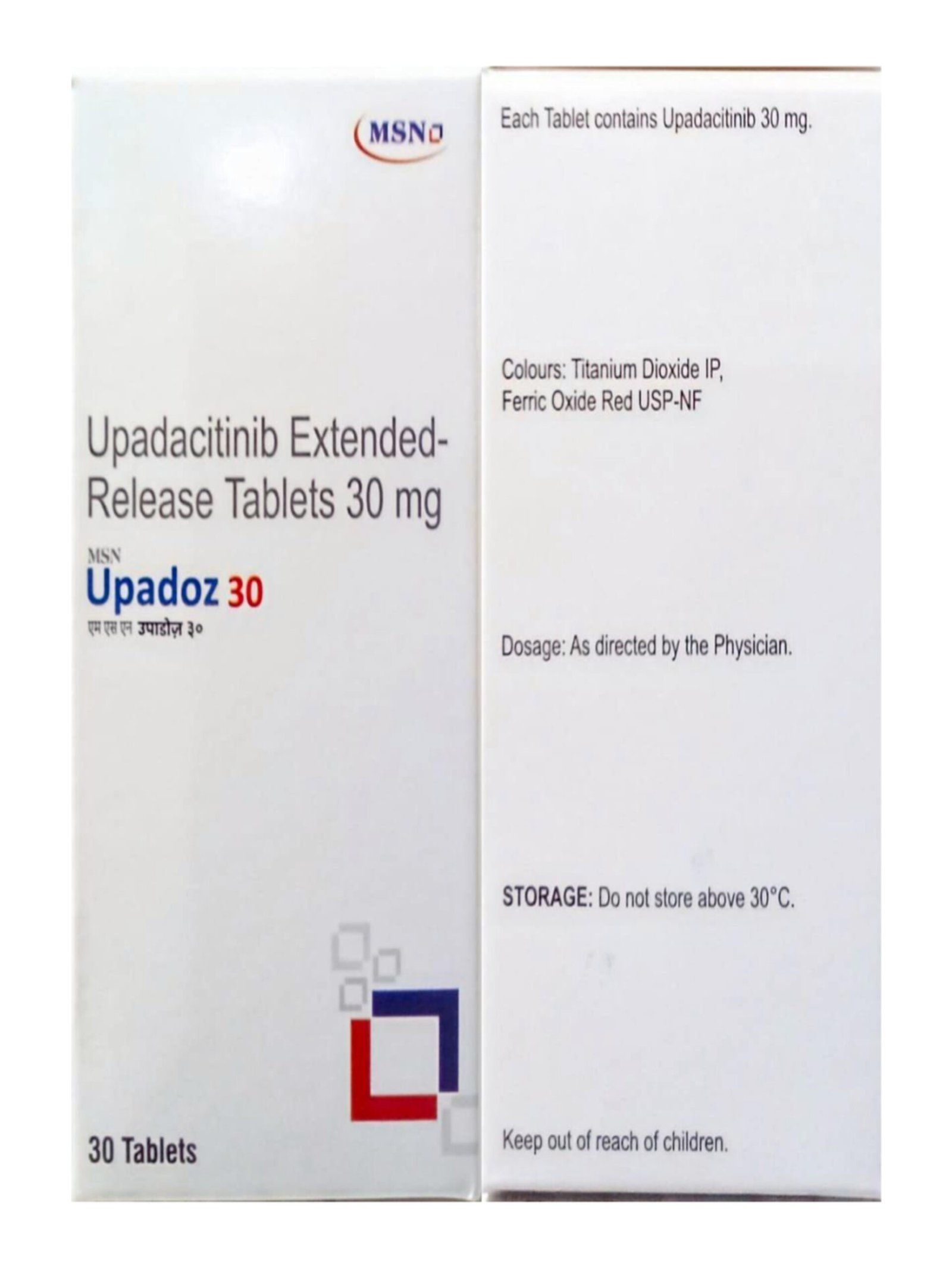
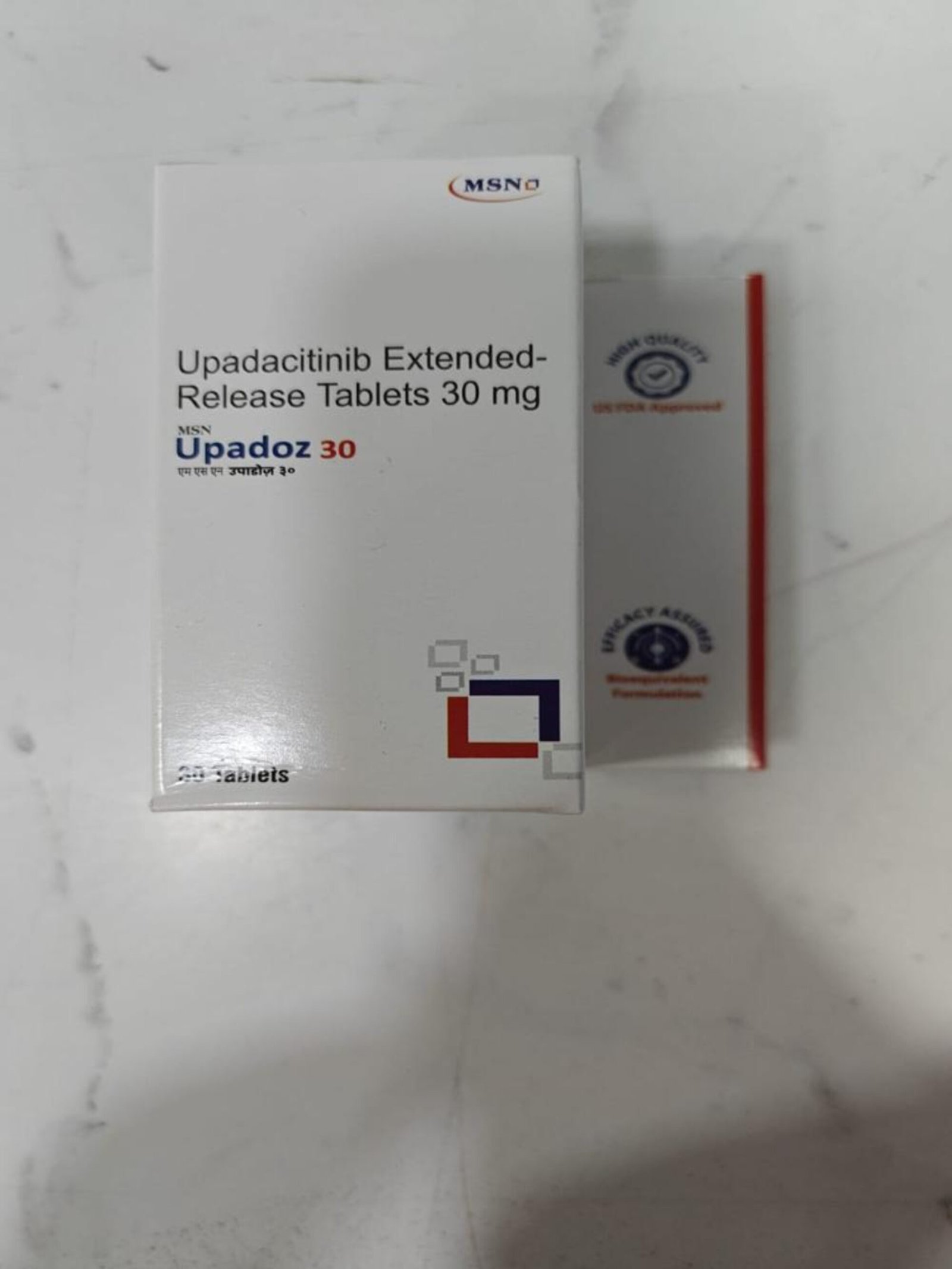
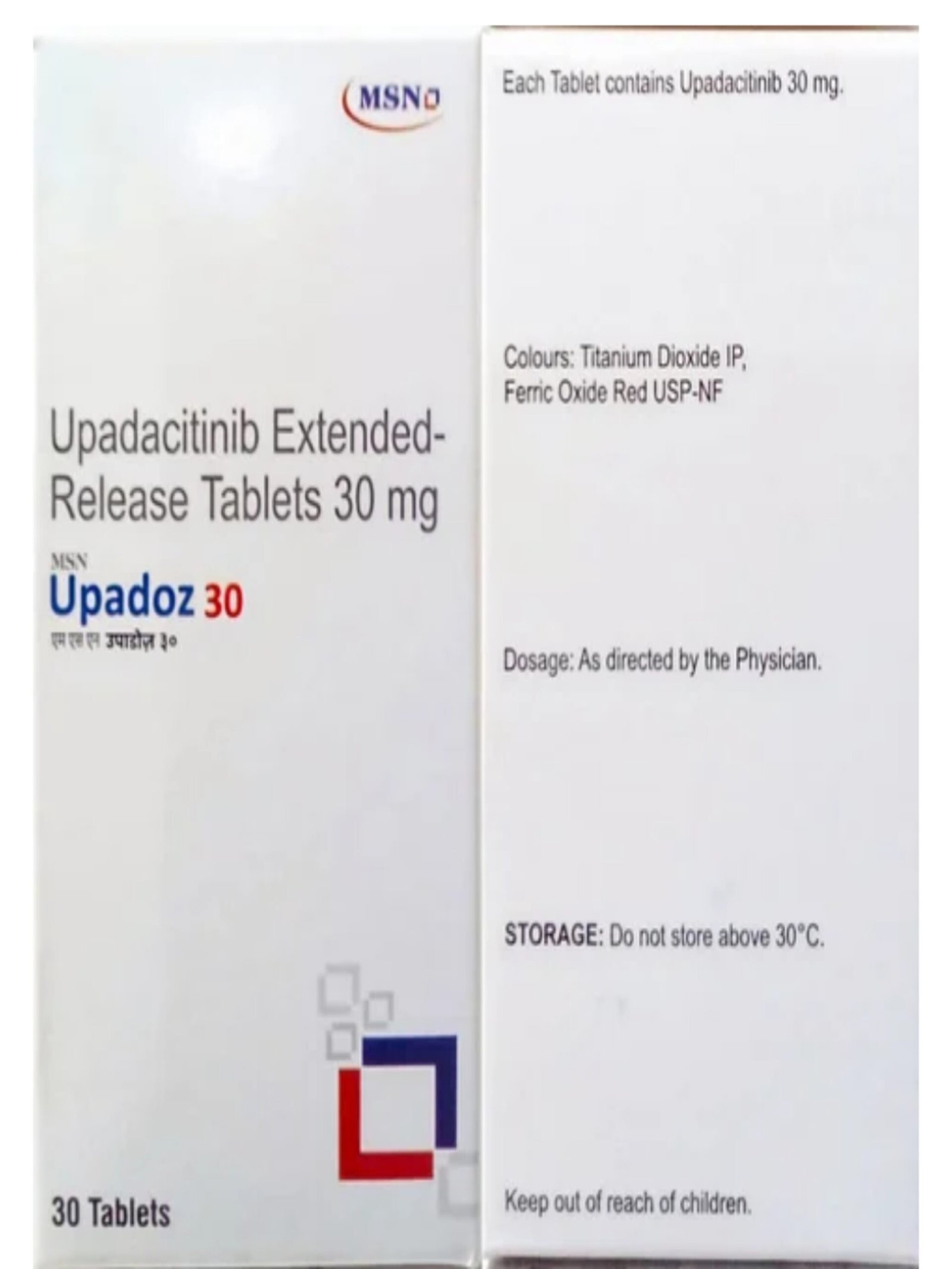
Upadacitinib 30 Tablets (often in the form of daily 30 mg tablets or equivalent doses) — intended for informational purposes only. This is not medical advice. If you or someone you know is considering Upadacitinib, please consult a qualified healthcare provider.
What is Upadacitinib 30 Tablets?
Upadacitinib 30 Tablets is an oral medication that belongs to the class of Janus kinase (JAK) 1-selective inhibitors. (DrugBank)
It’s marketed under the brand name Rinvoq in many regions. (DrugBank)
Upadacitinib works by blocking JAK1, which plays a role in signalling pathways that lead to inflammation and immune system activation. (DrugBank)
What is it used for?
Upadacitinib 30 Tablets has been approved for a variety of immune-mediated and autoimmune conditions where inflammation is central. These include:
- Moderately to severely active rheumatoid arthritis in adults (especially when other treatments have not worked well). (DrugBank)
- Psoriatic arthritis, ankylosing spondylitis/axial spondyloarthritis. (DrugBank)
- Moderate to severe atopic dermatitis (eczema) in adolescents/adults, and also ulcerative colitis, Crohn’s disease in some cases. (Wikipedia)
- Joint damage prevention: As a DMARD (disease-modifying antirheumatic drug), it can slow progression of joint injury in arthritis. (Arthritis UK)
How is it taken?
The usual form is an extended-release tablet which is taken once a day. (Cleveland Clinic)
It should be swallowed whole, with or without food (depending on your doctor’s instructions). In the case of missing a dose, your healthcare provider’s advice should be followed (typically taking as soon as possible, unless near the next dose). (Cleveland Clinic)
Note: Always follow your prescribing doctor’s exact dose—“30 mg tablet” may be a shorthand, but your actual dose might vary depending on condition, kidney/liver function, other medications, etc.
What are the benefits?
- Improved symptoms: Many patients on Upadacitinib observe reduction in pain, swelling, stiffness, improved mobility (in arthritis) or improved skin symptoms (in eczema). (Arthritis UK)
- Slowing of disease progression: By targeting a core pathway in inflammation, Upadacitinib may help prevent joint damage or worsening of disease over time. (DrugBank)
- Oral administration: Unlike many biologics that require injections or infusions, Upadacitinib offers a pill‐based option, which can be more convenient for many patients.
What are the risks & side-effects?
Like all medications, Upadacitinib 30 Tablets carries both common and serious risks.
Common side effects
According to sources:
- Upper respiratory tract infections, colds/sinus infections. (Wikipedia)
- Nausea, headache. (Cleveland Clinic)
- Fatigue, general weakness. (Arthritis UK)
Serious or important warnings
- Because Upadacitinib 30 Tablets weakens immune signalling by inhibiting JAK1, there is increased risk of serious infections (e.g., tuberculosis, opportunistic infections). (Cleveland Clinic)
- Increased risk of blood clots, heart attack, stroke, and certain cancers – especially in patients with certain risk factors (e.g., older age, smoking, pre‐existing cardiovascular risk). (Wikipedia)
- The drug may not be appropriate for patients with active infections, serious liver disease, or certain other comorbidities. (Arthritis UK)
- Interaction risks: Upadacitinib 30 Tablets is metabolised via CYP3A4 (and to a lesser extent CYP2D6), so drugs that strongly inhibit or induce these enzymes can alter its levels. (DrugBank)
Monitoring
Because of the above risks, monitoring is important:
- Baseline screening for infections (e.g., TB) before starting. (Cleveland Clinic)
- Ongoing blood work (for liver function, blood counts, etc). (Arthritis UK)
- Periodic evaluation of cardiovascular and thromboembolic risk factors.
Considerations: 30 Tablets (Monthly Supply)
When discussing “30 tablets”, likely this refers to a 30-day supply of the once-daily drug. Here are a few practical points for patients:
- Adherence matters: Taking the tablet every day is key to maintaining benefit and avoiding flare-ups of disease.
- Missed doses: If you miss one, take as soon as you remember unless it’s almost time for your next dose (consult your doctor). Do not double up unless directed.
- Storage: Store at room temperature, keep in original packaging, avoid moisture/heat.
- Refills: Make sure you have timely refills so you don’t miss days of therapy.
- Cost & insurance: As a relatively high-end therapy, cost/coverage may vary significantly depending on region, insurance, and formulary status — checking with your insurer is wise.
Is it right for you? Questions to discuss with your doctor
- What is the exact dose you’re prescribed? Is it 15 mg, 30 mg, or some other amount?
- What other medications are you taking that might interact (e.g., CYP3A4 modulators, other immunosuppressants)?
- Do you have any of the risk factors (heart disease, smoking history, previous clotting events, liver disease, infections) that might affect safety or require extra monitoring?
- What are the expected benefits in your specific condition (arthritis vs skin disease vs bowel disease)?
- What happens if side-effects occur? What monitoring will your doctor perform?
- If you’re pregnant, planning pregnancy or breastfeeding, what are the implications? (Upadacitinib may have limited data in these populations.)
- How will you measure success (symptom relief, joint imaging, skin outcomes, quality of life)?
Final thoughts
Upadacitinib is a powerful treatment option that offers potential benefits in multiple inflammatory diseases, especially for individuals who have not achieved satisfactory results with other therapies. As with any potent medication, the balance between benefit and risk is important, and it requires ongoing management and monitoring.
If you or someone you know is starting Upadacitinib (or considering it), the best approach is a shared discussion with a rheumatologist, dermatologist, gastroenterologist (or relevant specialist) and your primary care physician. Being informed, asking the right questions, and staying engaged in your care will help maximize the benefit and minimize risks.
Website : Jyotilifecar