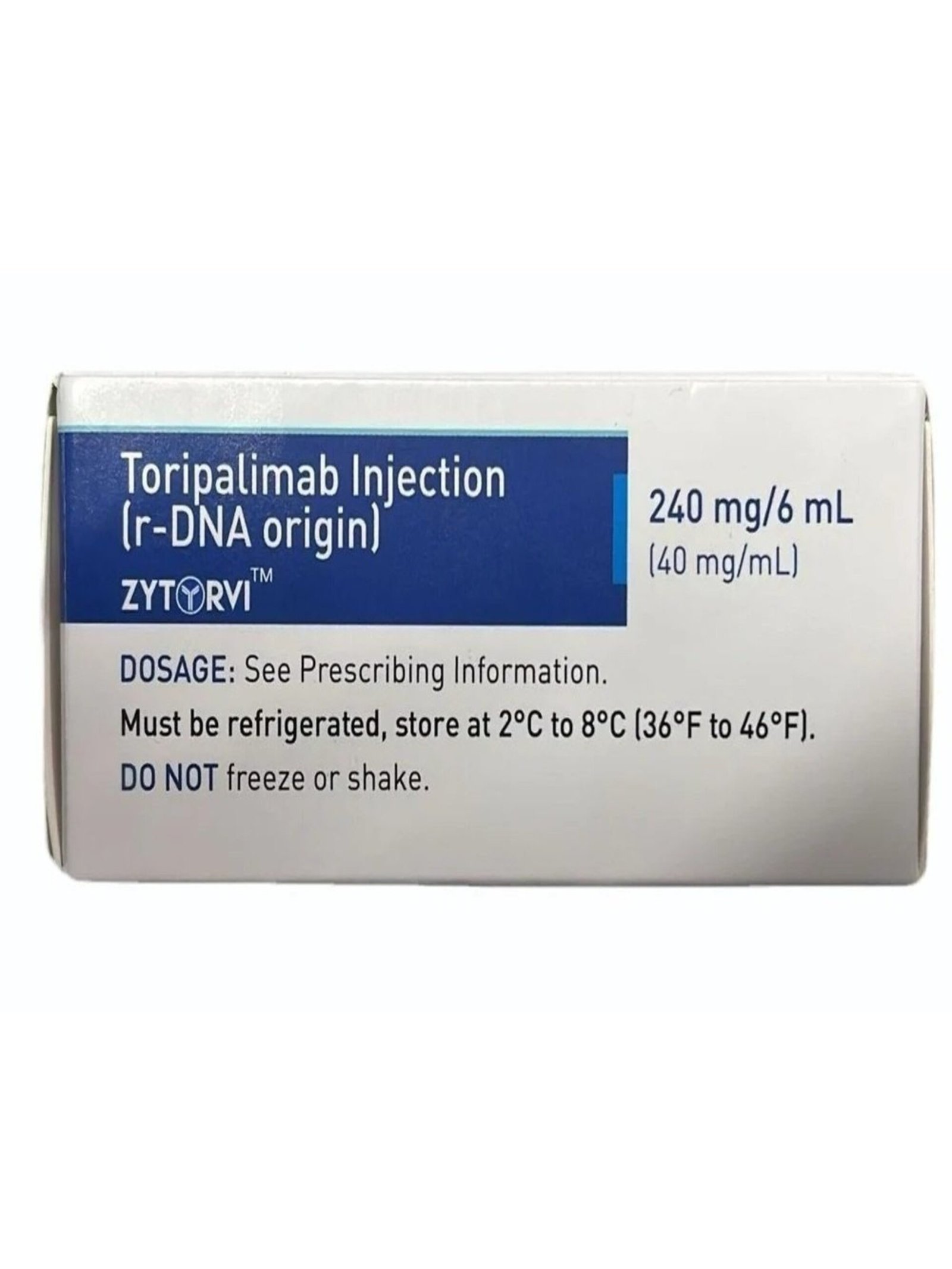


Toripalimab Injection (Brand: Loqtorzi)


Introduction
In the evolving field of cancer immunotherapy, toripalimab stands out as a meaningful advancement. Known in the U.S. under the brand name Loqtorzi®, this monoclonal antibody marks a new option for certain patients with difficult-to-treat cancers.
Here’s a deep dive into toripalimab: how it works, where it’s approved, what the benefits and risks are, and what it means for patients and oncology care.
What is Toripalimab?
Toripalimab is a humanised IgG4 monoclonal antibody that binds to the programmed cell death receptor-1 (PD-1) on T-cells. By blocking PD-1’s interaction with its ligands (PD-L1/PD-L2), toripalimab helps restore the immune system’s ability to recognise and attack tumour cells. (DrugBank)
It is administered via intravenous (IV) infusion and must be given in a clinical setting (hospital/oncology centre) under specialised supervision. (FDA Access Data)
Approved Uses & Regulatory Status
Toripalimab is approved for specific indications, particularly in the U.S. and other jurisdictions:
- In the U.S., the Food and Drug Administration (FDA) approved toripalimab (Loqtorzi) for adults with metastatic or recurrent, locally advanced Nasopharyngeal Carcinoma (NPC) in combination with cisplatin + gemcitabine as first-line therapy. (Drugs.com)
- Also, as monotherapy in certain patients with recurrent/metastatic NPC after platinum-based chemotherapy. (MedlinePlus)
- Globally, toripalimab was first approved in China (2018) for melanoma and has since gained approvals for various cancer types in emerging markets. (PMC)
This approval is particularly meaningful because NPC is a challenging cancer type with limited treatment options, especially after prior therapies. (Cancer.gov)
Why Is This Important?
- Novel mechanism: As an immune checkpoint inhibitor, toripalimab represents a shift from traditional chemotherapy to harnessing the immune system.
- Improved outcomes: Clinical trials showed significant benefits in progression-free survival (PFS) and overall survival (OS) when used appropriately. (Oncodaily)
- Expanded options: For patients with recurrent/metastatic NPC or other difficult tumours, this offers hope beyond standard treatments.
- Global access: While initially developed in China, its availability in the U.S. and other regions underlines global cooperation in cancer therapy.
How Is It Administered?
According to the prescribing information:
- The vial contains 240 mg/6 mL (40 mg/mL) solution. (FDA Access Data)
- First infusion: over 60 minutes. Subsequent infusions may be reduced to ~30 minutes if no prior infusion-related reactions. (FDA Access Data)
- When combined with chemotherapy, toripalimab should be given prior to the chemotherapy on the same day. (FDA Access Data)
- Storage: refrigerated (2 °C–8 °C), protected from light; diluted solution stable for up to 24 hours refrigerated. (FDA Access Data)
Efficacy – What the Data Show
- In one pivotal Phase 3 trial (JUPITER-02), toripalimab + gemcitabine/cisplatin demonstrated a ~48% reduction in risk of progression or death (hazard ratio ~0.52) compared to chemotherapy alone. (Oncodaily)
- As monotherapy post-platinum treatment (POLARIS-02), toripalimab showed anti-tumour activity and a favourable safety profile. (Oncodaily)
- Additional trials are exploring other cancers (e.g., triple-negative breast cancer) though those uses are not yet fully approved. (LBBC)
Side Effects & Safety Considerations
Being an immunotherapy, toripalimab comes with a distinct safety profile:
Common side effects: fatigue, musculoskeletal (bone/muscle) pain, nausea, vomiting, decreased appetite, constipation, rash. (Drugs.com)
Important warnings:
- Immune-mediated adverse reactions (IMARs) can occur in any organ system (e.g., lungs, liver, endocrine glands) and may be severe or fatal. (FDA Access Data)
- Infusion-related reactions: since this is IV, reactions like flushing, chills, fever, dyspnea may happen; monitoring is required. (MedlinePlus)
- Patients with auto-immune diseases, prior organ transplants, or receiving immunosuppressants must be evaluated carefully. (chemocare.com)
Patient Journey & Practical Considerations
For patients considering/receiving toripalimab:
- Pre-infusion check: baseline labs (liver, kidney, thyroid), assess for pre-existing autoimmune conditions.
- Setting: Infusion in a specialised oncology clinic; requires monitoring during and after.
- Expectations: Unlike chemotherapy that may show rapid shrinkage, immunotherapy responses may take time (sometimes weeks) and may include pseudo-progression (initial increase in tumour size due to immune infiltration).
- Supportive care: Manage side effects proactively — e.g., hydration for GI side effects, dermatologic monitoring for rash, endocrinology consult if thyroid changes.
- Communication: Clear discussion between oncologist and patient about benefits vs risks, the novel mechanism, and realistic timelines.
The Big Picture: Why This Matters in Oncology
Toripalimab’s approval for NPC in the U.S. is a landmark because NPC is relatively rare in many Western regions, so dedicated therapies are limited. Its global development shows how oncology is becoming increasingly international — a drug developed in China, licensed internationally, and approved for U.S. use.
Moreover, it reinforces the shift toward immuno-oncology as a pillar of cancer treatment — checkpoint inhibitors like toripalimab are now part of the standard of care for many cancers, and expanding indications continue to emerge.
What’s Next?
- Further indications: Trials are underway exploring toripalimab in other tumour types (e.g., lung cancer, esophageal carcinoma, breast cancer). (PMC)
- Combination strategies: Combining toripalimab with other immunotherapies, targeted agents, or novel modalities may broaden its use.
- Biomarker research: Identifying which patients benefit most (e.g., PD-L1 expression, tumour mutational burden, immune-signature) is ongoing.
- Access & affordability: As with many advanced therapies, access in emerging markets and cost-containment remain key issues.
Website : Jyotilifecar